
Alabama Arrest Warrants Explained
In Alabama, an arrest warrant is a court order that lets an officer take a named person into custody on a stated matter. Alabama Rule of Criminal Procedure 3.1 controls how that process begins. A judge or magistrate may issue a warrant or summons after an indictment, or after a finding of probable cause under the rule. The complaint alone creates nothing. An authorized judicial officer reviews the basis first. Then that officer chooses the process the law allows. Which Alabama court issues it depends on the charge. Circuit Court is the felony trial court. District Court handles county misdemeanors and preliminary matters, while municipal courts hear city cases within their jurisdiction. The court with authority over the underlying matter issues the process, and the assigned law-enforcement agency serves it.
Rule 3.1: Alabama Arrest Warrant or Summons
Alabama Rule 3.1 explains when criminal process may issue after an indictment or a probable-cause finding. At the complaint stage, the facts can come from three places. The Alabama complaint itself, supporting affidavits, or witness testimony. The judge or magistrate must find that the information reasonably supports an offense. Probable cause to believe the defendant committed it is required too. The rule also favors a summons in some situations. An Alabama summons works when the person is not in custody, the charge is bailable as of right, and nothing suggests the person will ignore it. If the summons goes unheeded, cannot be served, or the judge doubts the person will appear, the rule provides a writ of arrest instead. More than one summons or writ can issue on the same complaint or indictment. That is the warrant-or-summons framework this Alabama rule sets.
Note: Alabama Rule 3.1 leaves the choice of warrant or summons to an authorized judicial officer after the stated legal review.
Inside an Alabama Arrest Warrant
Alabama Rule 3.2 spells out what arrest-warrant process must contain. A complaint-based warrant carries the issuing judge or magistrate's signature. One based on an indictment is signed by the presiding circuit judge, the clerk, or an authorized designee. The document names the defendant or gives a description good enough for reasonable identification. It also states the offense and commands an arrest and appearance before a judicial officer.
| Person | Name or description sufficient to identify the defendant in an Alabama warrant. |
|---|---|
| Offense | The charged offense stated in the Alabama warrant. |
| Signature | An Alabama judicial officer or authorized signer, depending on the case basis. |
| Command | Arrest and production before the named Alabama judicial officer or an available same-county officer. |
| Release terms | An Alabama warrant may include conditions for a charge bailable as of right. |
| Execution and return | The Alabama officer records the manner and date, then returns process to the named clerk. |
Alabama Rule 3.2 sets no single public-facing format. It requires no fixed warrant number style, county field, date stamp, or status vocabulary. So a local Alabama search result may show only part of the legal record.
A C-64 Form Is Not a Public Warrant List
The Alabama Administrative Office of Courts keeps a criminal forms catalog, and it includes Form C-64, titled Complaint and Warrant. That form covers process used in District or Municipal Court matters. It can help you read the court paperwork. But a form sitting in a catalog is not a public search portal. Nor does it mean every warrant follows one identical public workflow. Be careful not to blur related records. An affidavit or complaint, the warrant issued on it, a later docket entry, and the sheriff's service record are distinct documents. Alabama public access also hinges on whether a record is pre-service, sealed, tied to an active investigation, or otherwise protected. Ask the issuing clerk which record is available and what identifier to use. The Alabama AOC's criminal forms catalog lists C-64 among statewide court forms.
Serving Arrest Warrants in Alabama
Alabama Rule 3.3 permits execution by law-enforcement officers anywhere in the state. Its commentary names the players: sheriffs and deputies, constables, city marshals, municipal police, and other officers acting within their legal duties. Statewide execution authority is one thing. Assignment is another. No Alabama rule identifies which agency holds a particular warrant. The court file and the serving agency remain the practical places to confirm it. Under Alabama procedure, the officer endorses the manner and date of execution, signs the warrant, and returns it to the clerk named in the process. After an arrest, Rule 4.3 governs release terms and prompt appearance before a judge, with a 72-hour outside limit in the rule's stated circumstances. Rule 4.4 covers identity, the charge, counsel and silence rights, and release conditions at an initial appearance. Alabama Rule 3.3 governs execution and return, though it does not assign every case to the same agency.
Who May Serve an Alabama Arrest Warrant?
Serving an Alabama arrest warrant can fall to a county sheriff or deputy, a municipal police officer or marshal, a constable, or another officer acting within legal authority. A rule permitting statewide execution still will not tell you which office holds the warrant. Local assignment and agency practice decide who answers questions about service and surrender. That is why the office responsible for the individual warrant is the one to call. County sheriff's warrant divisions show how this works in practice. The Tuscaloosa County Sheriff's Warrant Division page describes one county office's role, and the Montgomery County Sheriff's Warrant Division offers another county-specific contact route. These are local Alabama examples, not a statewide rule. They do not establish uniform sheriff practice or one contact route for every case. Check with the office handling the specific warrant.
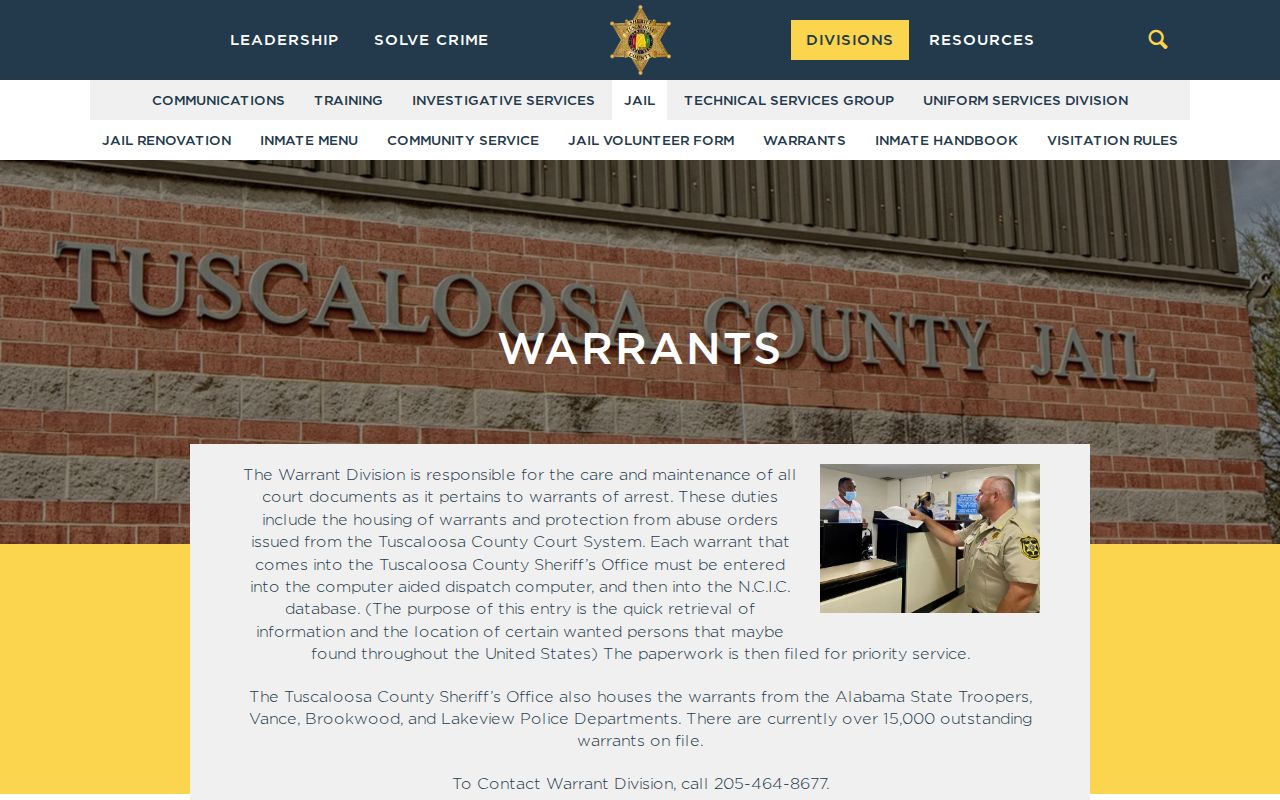
Each Alabama county runs service its own way. For any other case, ask the issuing court which agency is assigned rather than assuming one county's process applies.
Note: Statewide authority to execute an Alabama arrest warrant does not identify the serving officer for an individual case.
Comparing Arrest, Summons, and Bench Warrants
Alabama courts use these terms with precision. An arrest warrant allows an arrest on the charge. A summons orders an appearance instead. A bench warrant usually follows a failure to appear in a case already open. One event can produce a citation, a license suspension, a warrant, and an unpaid fine that stay separate Alabama records.
| Feature | Arrest Warrant | Summons | Bench Warrant |
|---|---|---|---|
| Purpose | Authorizes arrest on an Alabama matter | Directs appearance without immediate arrest | Addresses an existing court obligation |
| Basis | Probable cause under Alabama Rule 3.1 | Eligible circumstances under Rule 3.1 | Missed appearance or unmet order |
| Next step | Confirm charge, Alabama court, agency, and release terms | Attend as directed by the notice | Ask the issuing Alabama court about appearance or recall |
Ignore an Alabama summons and further process can follow under the rule. A missed court obligation is a different matter; see Bench Warrant Search. Neither a summons nor a ticket proves that a warrant issued.
When an Alabama Arrest Warrant Is Not Public
Alabama treats warrant papers as public only in part. The Alabama Open Records Act, Ala. Code § 36-12-40 covers public writings but lists exceptions. It promises no access to every arrest-warrant record. Court privacy rules add limits. So do juvenile-record confidentiality under § 12-15-133, sealed filings, active investigations, and case-specific orders. Some Alabama county magistrate pages state that unserved arrest warrants are not public in their local channels. The Jefferson Circuit Clerk’s magistrate page says arrest-warrant information stays closed before service. The Madison Circuit Clerk’s warrants page posts its own pre-service limit and contact route. Neither statement binds every warrant statewide. Ask the issuing clerk what can be released and which route applies. A restricted record proves nothing either way about whether a warrant exists.
Access point: Use the Alabama issuing court for docket and order questions, and the assigned agency for its service record. An Alabama public-record request may be redacted or denied under applicable limits.
If There Is an Arrest Warrant for You
Gather the details first. If an Alabama arrest warrant may involve your case, pin down the court, the Alabama county or city, the case number, the charge, and the agency assigned to serve it. Then call the clerk. Ask whether the warrant issued and whether any pre-service restriction applies. Ask the sheriff or police agency about its own service record and local steps. A county list or an ALEA Fugitive Search result is only a lead, not confirmation of present status. Talk with Alabama counsel before contact or travel if an arrest could occur. Resolution may involve a voluntary appearance, bond, or a motion to recall or quash. Only the Alabama court that issued the warrant can withdraw it. Use the County Directory to reach the Alabama county court and sheriff. Call a municipal court separately for a city case.
Important: If an Alabama arrest is possible, speak with counsel before appearing and ask the issuing court or sheriff how to arrange the required next step.
Note: A warrant bond payment does not itself establish that an Alabama warrant has been recalled by the issuing court.
Alabama Arrest Warrant Payments Need Court Confirmation
Money questions here go to the court, not to guesswork. An Alabama warrant bond is set by the court and sits apart from a fine, court cost, ticket payment, or ALEA license reinstatement fee. Confirm the current amount and accepted method with the issuing Alabama clerk or sheriff before paying. Paying does not by itself recall the warrant. It also does not update every agency record. Use the Alabama sheriff’s warrant-unit phone line or official local contact route to verify payment instructions. Watch for scams as well. The Autauga County Sheriff’s FAQ carries one local Alabama warning about phone solicitations seeking money on behalf of the office. That notice covers the scam calls only. It sets no statewide bond or clearance procedure.
Reach the Alabama court or agency through its official contact details for the Alabama case. Keep every receipt and court order.