
Alabama Municipal Court Warrants Explained
An Alabama city can run its own Municipal Court. That Alabama court hears ordinance violations and whatever cases state law assigns it. Local traffic matters often land there. Certain misdemeanors do too. An Alabama city court may issue a warrant in any case before it. The paperwork varies. One Alabama order may say warrant of arrest, while another says alias warrant or capias, depending on the case and the judge. The label matters less than the document itself. The order in the Alabama court file names the case, the issuing judge, and the next required step. A city case never turns into an Alabama county Circuit Court or District Court case on its own. The city clerk or court administrator keeps the municipal docket. The Alabama county Circuit Clerk administers records for Circuit and District Court instead. Alabama municipal courts carry their own jurisdiction. They keep their own records and local public channels. An Alabama county sheriff may serve a city warrant, yet the issuing Alabama Municipal Court still decides whether its order is active, recalled, or set for a new appearance.
Alabama Municipal Courts Keep City Cases Separate
Alabama city courts work inside a municipal jurisdiction. Alabama District Court covers county-level misdemeanors, preliminary hearings, and assigned traffic cases. Alabama Circuit Court handles felonies and broader trial work. Probate Court has limited statutory duties. It is not the routine court for an Alabama city criminal warrant. Knowing this court map narrows a warrant search fast. The city named on an Alabama citation can matter even when the person lives elsewhere in the county. The Alabama judiciary lists Municipal Courts as their own tier on the Alabama AOC Municipal Courts information page. Each issuing Alabama court keeps its own docket. A city portal may link to case information, but no statewide roster makes every Alabama municipal warrant searchable online. Ask the Alabama municipal clerk which case number applies. The Birmingham, Alabama Municipal Court page describes a city court's jurisdiction and its part in warrants and bail. That Alabama page is the court's own public information.
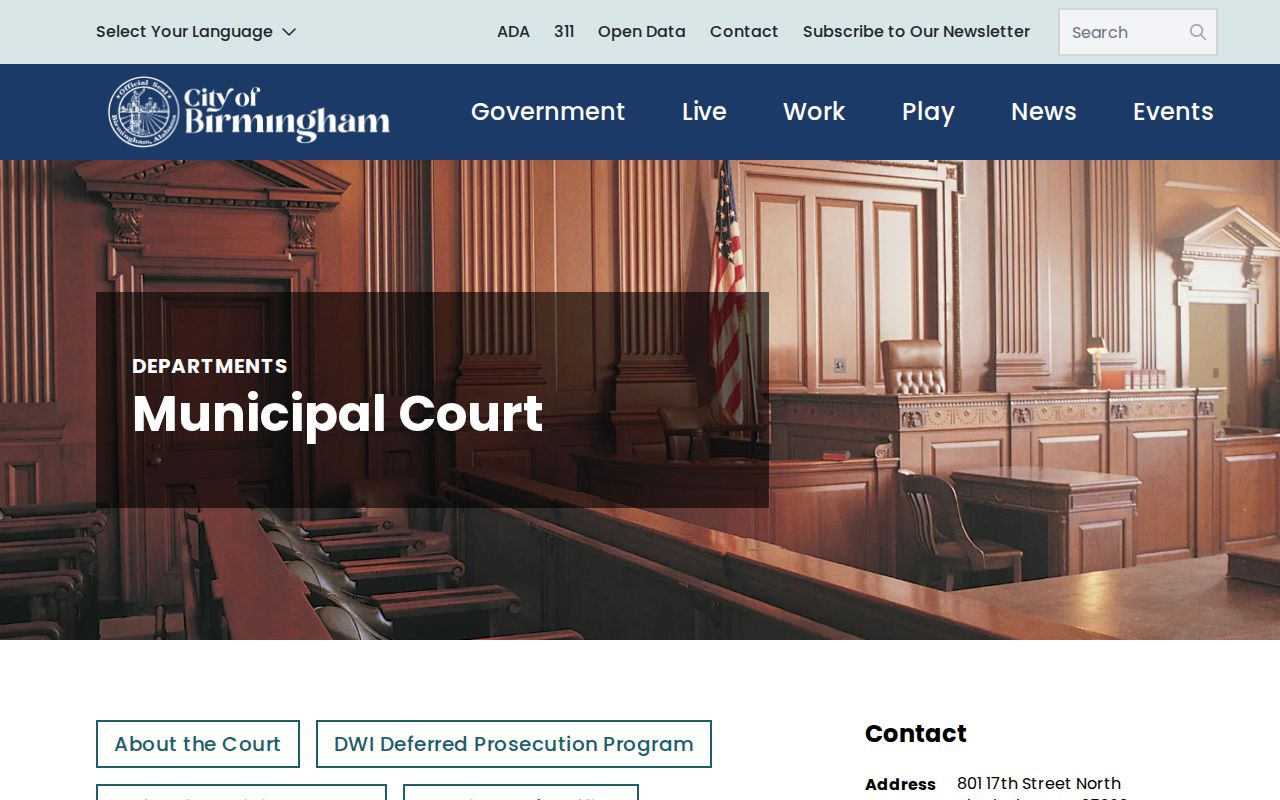
A local page like that explains one court's role. It sets no rule for every Alabama city. The right contact is still the Alabama municipal court named on the case.
Municipal and County Warrants Compared
The divide here is the court, not the map. What matters is which tribunal holds the case and its records. In Alabama, a county sheriff may serve a city-issued warrant, yet the city court still controls the case. An Alabama county list and a city case search answer different parts of the question. A municipal case began at the city court. Contact that court even when an Alabama county search returns nothing.
| Question | Municipal Warrant | County Court Warrant |
|---|---|---|
| Issuing court | Alabama City Municipal Court | Alabama District or Circuit Court, as assigned |
| Case record | Alabama municipal clerk or court administrator | Alabama Circuit Clerk for county Circuit and District records |
| Possible serving agency | City police or marshal; sheriff may also serve | County sheriff or another authorized officer |
| Best status check | Issuing city court, then serving agency | Issuing county court, then serving agency |
Alabama Rule 3.3 governs execution and return of criminal arrest warrants by authorized officers. It still creates no single public county list.
Alabama City Search Portals Have Different Scopes
Alabama public search tools differ from city to city. Troy's official court page links a case portal with a warrant-number field, and the search can show whether a user has an active warrant. That reach covers Troy Municipal Court only. The page promises no complete list and posts no update schedule. So read each Alabama city example narrowly. A local channel existing is not statewide coverage. Birmingham's public portal accepts case and citation identifiers, but nothing on the interface labels it a warrant-status search. A docket hit there says nothing about an order unless the city court confirms it. The Troy portal shows one route that exists. The issuing clerk or judge remains the authority on the current warrant record. Alabama has no single all-city municipal warrant search. When a portal finds only a ticket or balance, call the clerk. Ask whether an order issued. Ask whether it was recalled, and which agency received it for service. A clean online result is not a court confirmation. Search fields differ by Alabama city, and a citation search may not expose warrant status at all.
Checking an Alabama Municipal Warrant
Start with the Alabama city printed on the citation or notice. An ordinance or traffic charge often belongs to municipal court, not the county Circuit Clerk. Before you call the clerk, gather the citation or case number, the name on the court file, and a rough court date. Then ask pointed questions. Is there a warrant? What does the Alabama docket show today, and was it served or recalled? Finish by asking what step the judge requires next.
- Identify the Alabama issuing city and municipal court from the citation, notice, or prior case papers.
- Follow only a search link published by that Alabama city's official court page, and read what record the portal covers.
- Call or write the Alabama Municipal Court Clerk if the search shows only a ticket, payment balance, or no warrant field.
- Ask the city police or marshal, or the Alabama county sheriff, which agency handles service in that case.
- Use the County Directory to reach the local sheriff and identify the relevant court; confirm a city case with the city court itself.
Huntsville posts its own Municipal Court warrant and bail information, and it makes one useful local Alabama example. Its hours and process belong to that city alone. When an Alabama sheriff or police agency posts no service record, ask the office directly for a request under the Alabama Open Records Act. A docket request goes through the city clerk and follows Alabama court-record access rules.
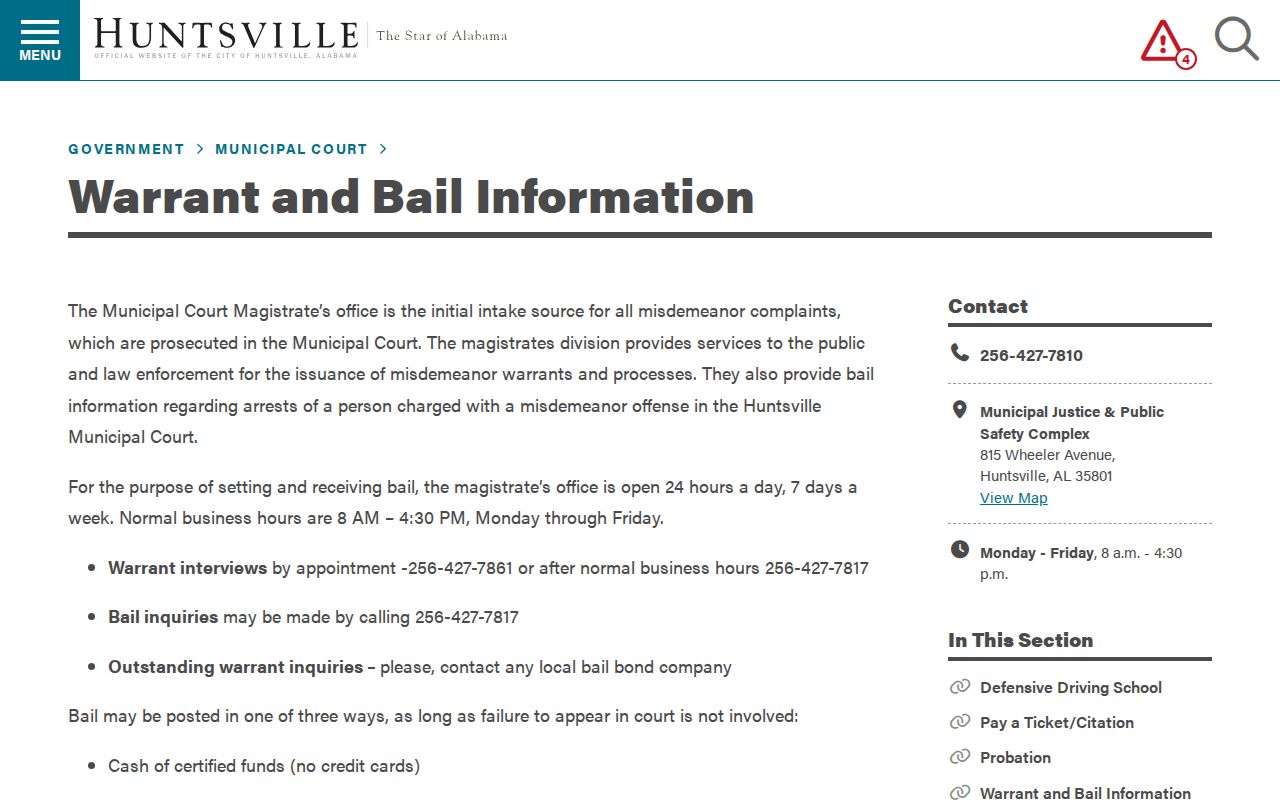
Treat this city guidance as applying to that one Alabama city's case only. For any other Alabama municipality, check its own official court page for current contact methods.
Alabama's Amnesty Search Name Has City Limits
Alabaster, Alabama, calls its local alias and capias warrant search the "Amnesty Search Database." The name sounds big, but it carries no statewide force. It is not an Alabama amnesty, a limited-time event, an automatic recall, or a fee waiver. The page describes an Alabaster Municipal Court channel and offers a phone route for pre-2010 matters. The search application itself gives no public field list, so call before counting on any particular result layout or refresh timing. Treat the page as a city-specific lead, then ask the Alabaster court what its docket and current order actually say. The example still helps elsewhere in Alabama, because it shows why one city may use a label a general county search never mentions. It does not tell you other Alabama cities use the same terms or the same payment and recall path. Check the official Alabaster page for current instructions. A page title cannot promise that paying online clears an order. If an Alabama case may hold a warrant, the issuing judge or clerk confirms what the court will do. Note: a city database title does not announce a statewide warrant amnesty or prove a warrant has been recalled.
Inside an Alabama Municipal Warrant
Every Alabama warrant entry belongs to a court case, yet public displays share no single statewide field set. Alabama's blank Rule 20B Court Record form shows what a full record can hold: court, case, and ticket identifiers, defendant and charge fields, dates, warrant issued, bond, service, recall, and forfeiture events. The form is a schema, not a live public list. An online portal may show less than the paper file. An Alabama city clerk can tell you whether a given field exists in that court's record at all.
| Record item | What to confirm in Alabama |
|---|---|
| Warrant number | Court-assigned identifier, if the city record exposes one |
| Offense | Ordinance, traffic, or other case description in the docket |
| Issuing court | Alabama Municipal Court and city that entered the order |
| Bond or fine | Current court-set bond or case balance, which are different amounts |
| Status | Issued, served, recalled, or other status only as confirmed by the court |
Never read a blank field as proof no warrant exists. An Alabama court record, a city web page, and a sheriff service record can each update on its own schedule. Ask the issuing clerk which record controls the next step.
Alabama Municipal Warrant Terms Vary by Court
An Alabama city docket uses words that differ from everyday speech. Forms and municipal cost references lean on alias and capias terminology in certain settings, though the state sets no single label for every missed-date warrant. A bench warrant is one common name for a judge's process in an existing Alabama case. Read the actual order before applying that name.
- Alias warrant
- A term used in some Alabama court or municipal records; the court entry defines its use in that case.
- Capias
- A writ or process term appearing in Alabama legal materials, with meaning that depends on statute and context.
- Recall
- An Alabama court's act of withdrawing a warrant or directing that it no longer be enforced.
- Bond forfeiture
- A separate Alabama court action that may follow failure to meet a bond condition.
The official Rule 20B Court Record form keeps separate fields for warrant issuance, service, recall, bond, and forfeiture. In Alabama, those entries track distinct events. Ask the municipal clerk what a status code means; no docket label is a statewide standard.
How to Resolve an Alabama Municipal Warrant
Only the Alabama court with authority over the municipal case can recall or quash its warrant. No one else can. Depending on the case, resolving it may mean appearing, asking for a new date, filing a motion, posting bond, or settling an underlying fine. An Alabama city payment portal can zero out a balance and still leave the recall question open. Ask the court first what it requires, and whether payment touches your plea or trial options.
- Confirm the court, case number, current warrant order, and serving agency.
- Ask the Alabama Municipal Court Clerk what filing, appearance, or bond step applies and whether counsel should contact the court.
- Follow the judge's order and obtain a receipt or written recall/disposition record.
- Ask whether Alabama city police, the marshal, or sheriff needs a separate update, then check that it was recorded.
Confirm before acting: In Alabama, paying a municipal balance or speaking with a clerk does not by itself prove that a judge recalled a warrant.
Alabama sets no statewide walk-in procedure, universal bond amount, or fixed update time. If an arrest could occur during contact, an Alabama lawyer can confirm the right city court and arrange a safe appearance. Keep every date, order, and payment proof.
Alabama Municipal Costs and Warrant Bonds
Money questions in an Alabama municipal warrant case have no single answer. The MC-17 municipal cost schedule shows how costs, fees, and fines break down by category. The October 2025 revision added a $15 DNA database cost under Act 2025-306. That charge applies in specified traffic and nontraffic cases, bond forfeitures, and alias or capias warrant issuance. It is not a flat fee for every Alabama warrant. It is also not the amount needed to post bond. For that, look to Alabama Rule 7.2, which sets a recommended general bail schedule rather than a quote for any one case. The actual bond turns on the judicial order and the court that issued it. Payment rules can differ from one Alabama city to the next too. Confirm the amount and the accepted methods with the issuing court before you send money or arrange an appearance. The AOC municipal forms catalog treats the MC-17 as an administrative schedule only, so it will not show a person-specific balance or decide whether a warrant gets recalled.
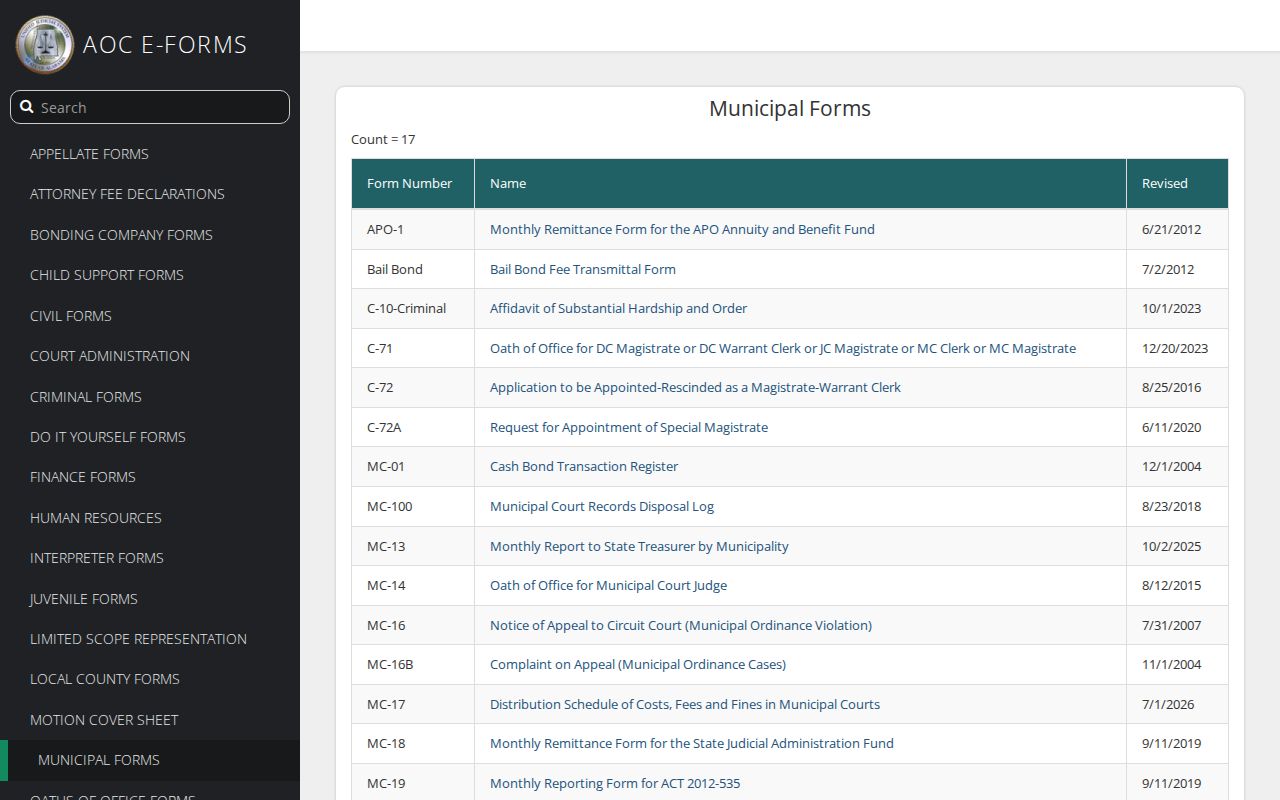
Alabama courts share one state forms catalog, yet each city's docket and judicial order still control the local case. Note: Court costs, a fine, and bond play different roles in an Alabama municipal case, and each should be verified separately.