
Checking for a Warrant in Alabama
Start where the case started. An Alabama warrant check works best when it follows the ticket, charge, or missed appearance back to its own court. No public search covers every county and city warrant in the state. Alabama's Administrative Office of Courts runs a Warrant Management System, but that tool stays internal to courts and law enforcement. ALEA offers a fugitive search open to the public, though its coverage is limited and unpublished. Case tools and payment pages answer different questions. The issuing court holds the docket and any recall. Ask the serving agency about its own record. So match the Alabama record to the event first. If a notice names a city, add that municipal court to the check. A relative helping out should rely on case papers or details the person can lawfully share, never on a name match alone.
- Identify the Alabama court, county, and city from the citation, case notice, bond paper, or other court document. Note the case number and date if available.
- For an identified Alabama trial-court case, use AOC Just One Look as a case-level docket channel. It is not an all-warrant search.
- Check ALEA Fugitive Search only as an additional limited Alabama public list. A blank result cannot establish that no local warrant exists.
- Open the County Directory for the Alabama sheriff and court where the case began. For an Alabama city citation, also contact that municipality's court.
- Ask the issuing clerk or sheriff to confirm current status, service, bond, and next steps. If arrest or a court appearance is possible, consider speaking with an Alabama attorney first.
ALEA's Alabama public search offers last name, type, status, city, and state filters. That is the whole form. It carries no county or agency selector, and no published field rules, option values, coverage, or update schedule.
| Visible Field | Control | What the Review Established |
|---|---|---|
| Last Name | Text | Alabama search prompt; match behavior and required status were not published. |
| Type | Select | Alabama form choice list was not exposed in the inspected page. |
| Status | Select | Alabama status values were not exposed. |
| City | Text | No Alabama county or agency filter appeared. |
| State | Select | Visible on the Alabama form; option values and statewide completeness were not stated. |
Alabama Warrant Checks Use Separate Tools
Alabama runs several official search channels. None of them combines into one public warrant result. Alabama AOC's Warrant Management System is an internal judicial and law-enforcement application. ALEA's Fugitive Search is a limited public fugitive tool. Alabama Just One Look opens trial-court records one case at a time. Traffic portals handle eligible citations and payments. An Alabama county sheriff's most-wanted list, where one exists, stays local to that publisher. So begin with the Alabama court or agency whose record answers your question. A case lookup may show a docket without showing a current warrant order. A payment receipt proves only that a payment was accepted, not that a warrant was recalled. When an Alabama page shows nothing, ask the issuing court and the serving agency directly.
| Channel | Can Help With | Important Limit |
|---|---|---|
| AOC WMS / E-Warrants | Alabama statewide court warrant-management capability | Internal application; no public warrant query was located. |
| ALEA Fugitive Search | Finding an Alabama public fugitive entry | No complete county roster, result span, or refresh schedule is published. |
| Just One Look | Looking up an identified Alabama trial-court case | One case at a time; not an Alabama warrant-only search. |
| Traffic Service Center / AlaPay | Eligible Alabama traffic-case options or payment | Not an Alabama warrant-status certificate or instant recall system. |
| County sheriff and issuing court | Local Alabama service, docket, order, and resolution questions | Online lists and access rules vary by Alabama county and court. |
Inside the Alabama Statewide Warrant System
E-Warrants, also called the Warrant Management System or WMS, sits on the list of applications the Alabama Unified Judicial System's Administrative Office of Courts supports. The AOC FY2023 Annual Report describes statewide deployment and an interface with ALEA e-crime software. That tool serves courts and law enforcement inside Alabama. It is not a public Alabama warrant search. The published material stops there. Alabama reports give no county-by-county installation list, no warrant categories, and no active count. Update timing goes unlisted too. Nor is there a record-level path into ALEA or national systems. An Alabama city or county warrant may therefore stay visible only through its issuing court and the agency serving it. The state system does not replace the local docket, the bond order, or the recall decision, which belongs to the issuing court. The deeper description is on the Warrant System page. Alabama's deployment language never says which local records a member of the public can inspect or confirm.
How an Alabama Warrant Reaches State Systems
Every Alabama warrant begins as a judicial order in a case. The court clerk keeps the record. A sheriff, a police officer, or another authorized officer may be assigned to execute it. Alabama Rule of Criminal Procedure 3.3 permits execution by law-enforcement officers anywhere in Alabama. It also requires the warrant's return to the named clerk. A statewide electronic tool can support that work. It does not turn the underlying court order into a public registry. The documented Alabama relationship is narrow. AOC reports cover statewide WMS deployment and an ALEA e-crime interface. They say nothing about automatic transfer, local agency participation, or how a recall propagates. Which Alabama records reach restricted law-enforcement databases is left open. So do not assume each Alabama county or municipal warrant follows one published pipeline. The honest high-level picture runs this way: issuing court and docket first, then the serving agency's own local process, with AOC WMS supporting statewide electronic processing and the ALEA e-crime interface documented while Alabama record-level routing is not. For one Alabama case, ask the court whether the order is still active. Ask the serving agency whether its own entry is current. One Alabama office may not update another office's separate record.
Alabama Courts That Issue Warrants
Warrants in Alabama come from more than one level of trial court. Alabama Circuit Courts are the general trial courts and take felony prosecutions. Alabama District Courts hear county-level misdemeanors, preliminary felony matters, and traffic cases assigned by law. Alabama Municipal Courts handle city ordinances. A city citation stays in municipal court even though the city sits inside a county. That structure explains why a search at one level may miss a question from another. The Alabama AOC FY2022 annual report counted 41 judicial circuits, 67 District Courts, and 278 municipal courts. Those numbers describe court capacity in Alabama, not outstanding warrants. Probate Court has separate statutory duties. It is not the ordinary criminal warrant court. Federal warrants sit outside the state system, so an Alabama warrant search will not reach them. When jurisdiction is unclear, identify the city first and use the Secretary of State's city and county lookup. Then contact the Alabama court that handled the case. The Alabama Circuit Clerk is the principal records contact for Circuit and District Court matters; the Alabama municipal clerk keeps the city docket. Source: Alabama AOC FY2022 Annual Report.
Alabama Warrant Types
Alabama dockets use several forms of process. An Alabama arrest warrant follows a judicial finding or indictment. It directs an officer to arrest a named person for a stated offense. An Alabama bench warrant, often tied to a failure to appear, may follow a missed obligation in an open case, though the court decides what process to issue. An Alabama summons only tells someone to appear. It is not an arrest order. Search warrants in Alabama concern a place, person, or property. They are not a public list of people. Alabama court materials also use alias and capias terms in particular settings. The wording varies by setting. Check any local Alabama docket label against the order and the court that issued it.
| Warrant Type | How It Arises | Who Issues It |
|---|---|---|
| Arrest warrant | Alabama probable-cause or indictment process in a criminal matter | Alabama court or authorized judicial officer |
| Bench / FTA warrant | An Alabama court action after a missed appearance or order, depending on the case | Alabama judge or authorized court |
| Search warrant | Alabama judicial authorization to search for described evidence | Alabama court with authority over the request |
| Alias / capias | Alabama procedural or fine-related context; not one statewide missed-date label | Alabama issuing court under the applicable process |
| Municipal warrant | Alabama city ordinance or municipal traffic matter | Alabama municipal court |
Ala. Code §15-10-60 uses “bench warrant” narrowly, for a judge's arrest warrant against a person accused by a grand jury in Alabama. It is not a blanket label for every missed-date matter. Note: A missed appearance can bring added process, but the exact order and consequences depend on the case and issuing court.
An Alabama Warrant Is Not a Conviction
An Alabama warrant directs action or brings a person to court under its terms. It does not close the case. A later hearing, dismissal, recall, or other order can change things. If you find an Alabama court entry, ask what order was entered. Then ask what appearance or filing comes next. Alabama traffic cases bring a separate risk of confusion. The citation, the court case, the warrant, license standing, and the payment record are related but distinct. Paying online may count as a plea or waive a trial option, depending on the choice presented. A payment record or a valid license does not by itself prove that an Alabama court warrant was recalled. Read the court's current notice before paying. Submit payment only when the online choice addresses the warrant and the plea consequence is clear. If anything is unclear, contact the issuing court before proceeding.
Alabama Traffic Warrants and License Holds
An Alabama traffic citation belongs to the issuing court. That court controls both the case and any warrant. The Alabama AOC Traffic Service Center offers options for eligible tickets. Newly issued citations take time to post. They can take up to 10 business days to appear. AlaPay accepts payment for qualifying tickets and fines. Neither portal is an all-court warrant lookup. Neither promises that an existing Alabama warrant has been recalled. A separate law lets a judge order an administrative license suspension for specified failure-to-appear situations. Ala. Code §32-6-17.1, enacted by Act 2023-337 effective October 1, 2023, limits the circumstances. For Alabama traffic payment plans, a nonpayment suspension generally requires at least three missed required installments. The act excludes certain commercial license holders and operators. ALEA's authenticated account lets a person review their own license standing. It does not search warrants. Resolve the Alabama court matter with the issuing municipal or District Court. Then check separately whether the sheriff's record and any ALEA license status need an update. Traffic Warrant Search explains the ticket, warrant, and license distinction in detail.
Inside an Alabama Warrant Record
Alabama Rule of Criminal Procedure 3.2 sets the core of an arrest warrant. It calls for identifying information, the charged offense, a command to arrest, and judicial authentication. Rule 3.3 covers execution and return. Those Alabama legal rules do not create one public statewide data layout. A county list in Alabama may show only a name, issue date, charge, or bond label. It may omit the court and the case number. Service status and update time can be missing too. Morgan County's public Alabama list shows what that looks like. It offers name search and date sorting, with entry details like age, issue date, charge or reason, and bond label. It shows no consistent warrant number, issuing-court field, served/recall marker, or freshness stamp. Treat any public Alabama entry as a lead. Confirm the underlying court record.
| Warrant Number | There is no statewide Alabama public number format in the reviewed material. The Morgan County example did not display one. |
|---|---|
| Subject | An Alabama warrant names the defendant or supplies a description sufficient for identification under Rule 3.2. |
| Charge / Offense | An Alabama warrant states the charged offense; a public list may use a short local description. |
| Issuing Court | The Alabama court or authorized officer is tied to the order. Ask which Circuit, District, or municipal court controls the case. |
| Bond / Release | Terms vary by the Alabama order. A sheriff-list label is not a statewide bond schedule. |
| Status / Return | Alabama service and recall are separate court and agency records. Confirm the entered order and local update with each custodian. |
An Alabama public listing is not the warrant paper or the full docket. Rule 3.2 governs the warrant's legal content; an Alabama list's search fields are set by its publisher.
Alabama Warrant Terms to Know
Alabama dockets and warrant portals use no single published status vocabulary. Read the word on an Alabama case record in context. Then confirm it with the court that entered it. The terms here describe common Alabama process, but the specific order and governing rule always control.
- Failure to appear (FTA)
- Missing a required Alabama court appearance. The next step depends on the case and court order.
- Alias warrant or capias
- Terms used in Alabama forms or local schedules for specified process; they are not a single statewide label for every missed date.
- Recall or quash
- Alabama court action withdrawing or setting aside a warrant. Filing a request alone does not cancel it.
- Bond forfeiture
- An Alabama court action involving bond security after a condition is breached. It is not the same as a fine.
- Warrant return
- The Alabama executing officer's report to the clerk named in the warrant about whether and how it was carried out.
Alabama Rule 3.3 governs an officer's return to the issuing clerk. The court controls judicial status. An Alabama sheriff or police agency may keep its own separate service record. Note: Ask the issuing clerk to explain a local docket label, since Alabama publishes no single status list covering all courts.
Alabama Warrant Records and Public Access
Alabama's Open Records Act, Ala. Code §36-12-40, gives citizens the right to inspect and copy public writings. Statutory limits and recognized exceptions still apply. Release of an unserved warrant is not guaranteed. The same goes for a juvenile file, a sealed matter, active investigative material, or protected identifiers. Access turns on the record, the office that holds it, court rules, and any case-specific order. Alabama's Rules on Privacy and Confidentiality of Court Records took effect January 1, 2025. They balance access against privacy. They change no preexisting access right. Jefferson and Madison County magistrate pages say unserved arrest-warrant details are not public in their local channels. That local practice is not every Alabama court's rule.
Key Rules:
Ala. Code § 36-12-40 recognizes access to public writings, subject to exceptions and other law.
Ala. Code § 12-15-133 makes juvenile court records and information confidential except as the statute allows.
Alabama court-record privacy rules took effect in 2025 and preserve existing access rights while addressing privacy.
Resolving an Alabama Warrant After a Missed Date
Missed a court date in Alabama? First pin down the court: Circuit, District, or municipal. Call the issuing clerk or magistrate. Ask whether a warrant issued, what appearance or motion is required, and whether bond terms are set. The sheriff or assigned agency handles local service and booking. Alabama sets no statewide walk-in rule, warrant fee, or update timetable. Only the issuing court can recall or quash its own warrant. A lawyer can identify the right court and arrange a motion, appearance, bond, or surrender plan. Paying a ticket, restoring a license, or removing a name from an online list may not clear the court order.
- Collect the ticket, notice, case number, and county or city where the case began.
- Ask the issuing court about status, bond, next date, and the procedure to request recall or appear.
- Confirm local service and surrender instructions with the sheriff or municipal agency before traveling.
- Keep the court order or receipt, then ask the court and serving agency whether their separate records have updated.
Note: A public search result is just a lead, while the court's current order and the serving agency's status answer different questions.
Alabama Court Record Rules Since 2025
The Alabama Supreme Court adopted statewide Rules on Privacy and Confidentiality of Court Records on December 20, 2024. The effective date was January 1, 2025. The rules frame a balance. Public access sits on one side; privacy on the other. They expressly create, expand, or restrict no access right that already existed. This is a framework for handling court records. It is not a new public warrant database. Nor is it a blanket rule that every Alabama arrest warrant is secret. Juvenile confidentiality still matters in Alabama. So do sealed filings, active-investigation limits, pre-service practice, and case-specific orders. Ask the issuing court or record custodian which rule applies to the particular record. Alabama's 2025 municipal cost schedule is a separate development. It lists a $15 DNA database cost for specified case events, including certain alias or capias warrant issuances. That is not a universal warrant-clearance fee. Alabama's annual municipal report and schedule describe court administration, not a live warrant inventory. Note: The 2025 rules do not guarantee release of any specific unserved, juvenile, sealed, or otherwise restricted warrant record.
Alabama Warrants by County
The issuing court holds the original warrant and docket. The sheriff may keep the service record. Start where the case began. The county and city of filing matter more than the nearest courthouse. Some Alabama sheriff sites post a list. Others give a warrant unit or court contact. A municipal citation may need its city court even when the county sheriff serves it. Jefferson, Mobile, Madison, Baldwin, Tuscaloosa, and Shelby rank among Alabama's largest counties in the 2020 Census population table. That ranking says nothing about warrants. The Secretary of State's lookup lets you search public officials by county or city, which helps pin down jurisdiction first. View the Alabama city and county lookup; it is a routing aid, not a warrant portal.
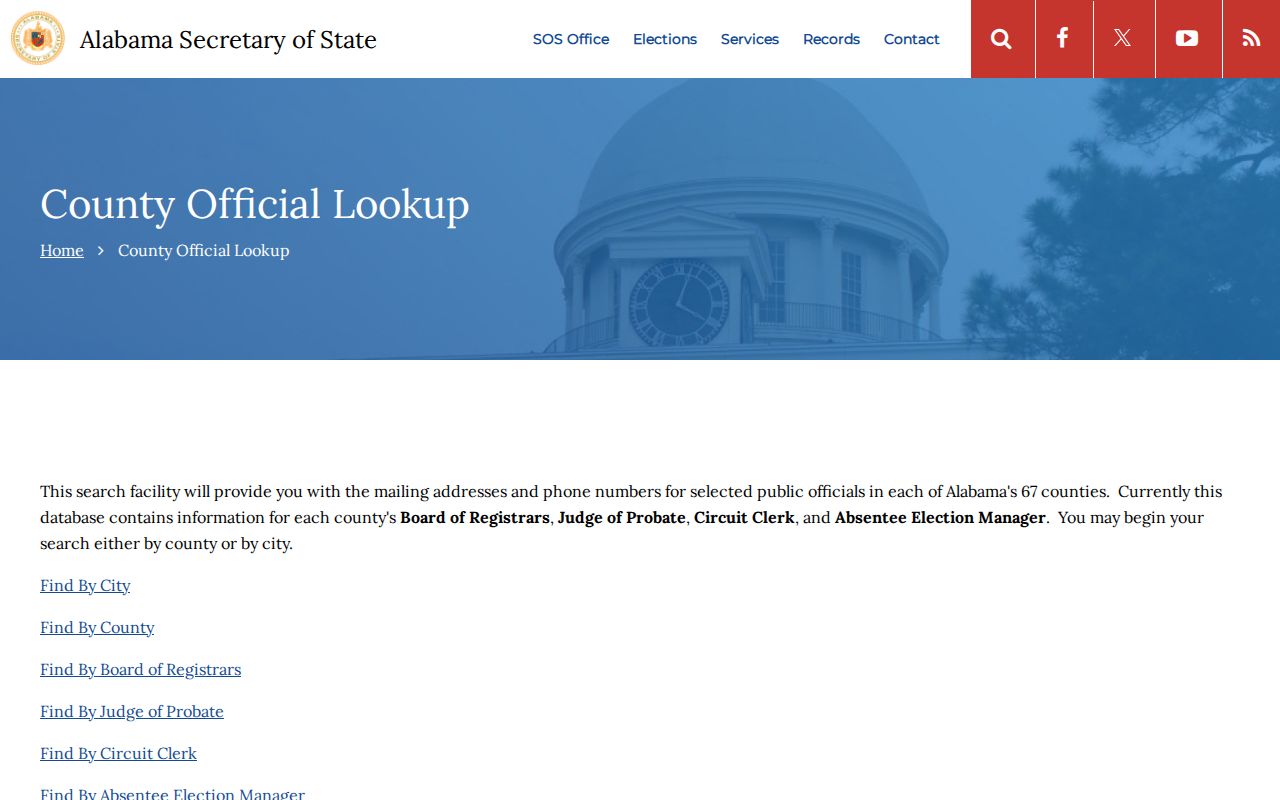
Pin down the right court first. This state directory helps with that. Browse the County Directory to open the local warrant records site for any of Alabama's 67 counties.
Jefferson County
Birmingham · largest Alabama county by 2020 Census population.
Mobile County
Mobile · second largest by the 2020 Census county table.
Madison County
Huntsville · third largest by that population count.
Baldwin County
Bay Minette · fourth largest, with major coastal communities.
Tuscaloosa County
Tuscaloosa · fifth largest; its sheriff has a local warrant-division channel.
Shelby County
Columbiana · sixth largest, with the county seat at Columbiana.