
Inside the Alabama Most Wanted Program
Alabama runs one statewide public fugitive search, and the Alabama Law Enforcement Agency's Community Information Center hosts it. It is an official channel. That is its strength and its limit. The page does not claim to list every active warrant, every county, or every law-enforcement entry, and it publishes no coverage map, refresh schedule, or total count. Treat any result as a lead. The issuing Alabama court stays the authority on the case and the warrant order itself. You can open the official ALEA Fugitive Search to use the state's public agency interface. It does not replace a warrant-status query. An Alabama county sheriff may keep a separate local list or a warrant-unit phone line. To confirm a matter, identify the Alabama court, county, or municipality tied to the underlying case and ask there. The state tool points; the court answers.
Alabama Fugitive Search Shows Limited Search Fields
The Alabama ALEA form offers a few search controls and no explanation of what sits behind them. Type, status, and state options appear without full values spelled out. No county or agency selector exists on the public form. So the search cannot be narrowed to a given Alabama court or sheriff. Don't read statewide completeness into the state name or the agency logo, because the form itself makes no such promise about which Alabama warrants it includes.
| Visible Field | Form Control | What Is Not Published |
|---|---|---|
| Last Name | Text entry | Coverage, date span, and matching rules |
| Type | Select menu | Full option list in the reviewed view |
| Status | Select menu | Full option list and update timing |
| City | Text entry | County coverage or participating agencies |
| State | Select menu | Whether any result set is comprehensive |
Alabama users can search only what the agency makes public through that interface. A blank or negative result does not establish that no local Alabama warrant exists. Follow the agency's official instructions for contact rather than copying or republishing individual entries. Note: The ALEA form shows search controls but no completeness statement or county coverage map for Alabama.
Alabama Statewide and County Most-Wanted Lists
State and county lists answer to different jurisdictions. ALEA's Alabama fugitive search is statewide in agency identity but says little about its actual coverage. Alabama county sheriffs may run their own active-warrant pages, staff a warrant-unit phone line, or point you to a direct court inquiry. No common public list combines every county and municipal court in Alabama. A statewide result cannot stand in for the local case file, and one sheriff's list cannot speak for any other county's warrants.
| Channel | Scope | Use It For |
|---|---|---|
| ALEA Fugitive Search | Limited fugitive information | Official public agency entries only |
| Alabama county sheriff list or unit | Local agency coverage | Local lead and service-status contact |
| Alabama issuing court or clerk | Case and judicial order | Current warrant, recall, hearing, or bond question |
| Federal court and USMS | Federal process | Federal docket or fugitive routing |
For local pages, the County Directory connects you to the relevant Alabama sheriff. Alabama city cases may require a separate municipal-court inquiry. A list can omit records because its scope is narrow, because access is restricted, or because the Alabama court and the agency simply keep different files.
The Gulf Coast Task Force Is Regional, Not a State List
The U.S. Marshals Service's Gulf Coast Regional Fugitive Task Force works federal, state, and local cases across Alabama and Mississippi. Its official profile says operations began in July 2006, that it runs eight operational offices, and that it has worked with more than 61 partner agencies. A July 2026 twentieth-year announcement puts the count above 75 partners. Those are regional agency figures, not Alabama-only totals and not public warrant search coverage. The task force is an investigative partnership, not a roster and not the clerk of any Alabama state court. It may work with local agencies on fugitive matters. For an Alabama warrant, though, the issuing court still controls bond, recall, and scheduling. The official task-force profile describes the institution and its geographic reach, and that is the only purpose it serves. Task-force activity is not a way to locate or approach a person. A case-specific question belongs with the issuing Alabama court, sheriff, or attorney. Federal partnership never changes which court entered a state warrant.
Reporting a Tip Safely
If your information concerns an Alabama public fugitive entry, use the contact method shown on the official agency page and follow that agency's instructions. Do not approach or confront anyone. A tip is not a request to clear a case, so don't send it to an Alabama court clerk expecting that outcome. A tip channel can't arrange a bond or a surrender either. Alabama agency contacts and court contacts hold different jobs, and each works only within its own role.
Use the right route: A tip belongs with the listed Alabama law-enforcement agency; a personal Alabama warrant, bond, or recall question belongs with the issuing court or counsel.
Alabama sets no statewide reward amount or comprehensive tip program. County pages may state their own tip policies. Those do not carry over to other jurisdictions. Keep private identifying details out of any channel outside an official agency. When the question concerns a family member in Alabama, preserve the notice or case number and contact the court or a lawyer. A fugitive page may offer public information, but it is not a court appearance and not a warrant-clearance desk for an Alabama case.
An Alabama Fugitive Entry Does Not Decide the Court Case
A fugitive entry is one thing: a public listing an agency posts. The Alabama warrant beneath it is something else, a court order tied to an actual case. The state's public source never explains how a listed person maps to court records, how often entries change, or which counties take part. So a listing you can see still leaves real questions open. It cannot tell you the current charge, the bond, whether a recall has issued, or the next court date. A missing entry proves just as little. Some Alabama warrants sit in local court or sheriff channels, some details stay restricted until service, and the ALEA result set claims no completeness. Cases also change after a page gets its last update. The issuing Alabama court and the agency serving the warrant hold the records that actually answer. Call them.
- Fugitive entry
- An Alabama public agency item about a person sought by law enforcement; not a full court docket.
- Warrant
- Judicial process issued in an Alabama case and controlled by the issuing court.
- Active-warrant list
- An Alabama county or agency list whose scope depends on its publisher.
- Recall
- A court action withdrawing or changing its warrant order.
An Alabama court file and a public fugitive page run on separate systems. They are related, not identical. Confirm your case status with the court, not the list.
How Most Wanted Differs From an Active Warrant
Most-wanted pages and active warrants answer different questions. A fugitive list is a curated channel run by law enforcement. An active Alabama warrant is a court order that exists whether or not anyone publishes it. The ALEA search does not claim to cover every warrant. An Alabama county sheriff list covers only its own turf. So a name missing from either Alabama page proves nothing. Absence does not establish that no warrant exists. For a fuller picture of Alabama county and statewide warrant records, see Outstanding Warrants. A public fugitive page can show how an Alabama agency communicates. It cannot replace the Alabama court and sheriff confirmation a personal case needs. Alabama case files may also carry access limits the public page does not.
Federal Warrant Sources Cover a Separate Court System
Alabama sits inside three federal judicial districts: Northern, Middle, and Southern. A federal case never becomes an Alabama Circuit Court case just because the arrest happened here. The U.S. District Court clerk for the Alabama district keeps the docket. The U.S. Marshals Service handles federal fugitive work. PACER opens federal dockets to the public. It runs under account and fee rules, and it is no all-warrant service. Sealed records stay out of reach. A quiet result there is not proof that no federal warrant exists. Sealed filings simply do not appear in public docket results. The official PACER site is a case-access route, and its public starting page shows just that, the entry point for federal case searches, not an Alabama warrant entry or any named person. When federal process touches Alabama, find the district named in your notice. Then work through the official clerk or the U.S. Marshals district contact list.
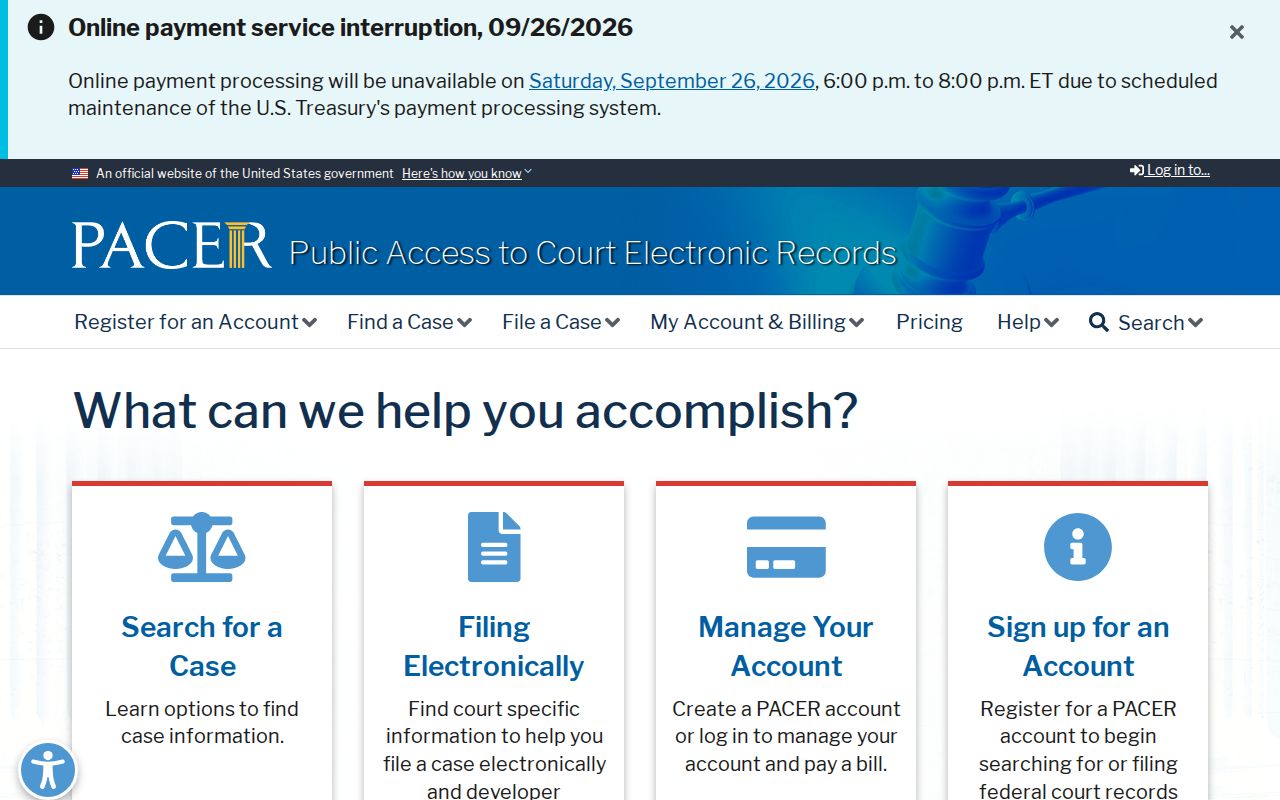
Federal and Alabama courts run separate systems. Check the docket through the portal for the jurisdiction named in your notice, then confirm with that court or its law-enforcement agency.
When You Think You Are on the Warrant List
Think an Alabama fugitive page concerns your own case? Do not use its tip route to ask about surrender, bond, or recall. Keep the official Alabama notice and case details close. Contact a criminal-defense lawyer early. Identify the Alabama court that issued the warrant, and that court can explain how to confirm the current order and what appearance or motion is required. Local service status may still need confirmation from the Alabama sheriff or police agency serving it.
Personal case: Do not approach a listed person or try to resolve an Alabama warrant through a tip form; contact counsel and the issuing court for a safe official route.
Use the County Directory to find the right Alabama court and sheriff contacts. An Alabama city citation may need its own Municipal Court call. No statewide portal can settle a case or recall a warrant.
A List Update Does Not Recall an Alabama Warrant
Names come and go on Alabama agency pages. That kind of update is not a court order. Alabama's public materials never promise that pulling an entry recalls a warrant, changes a bond, or closes a case. Only the issuing Alabama court can enter a judicial recall. The court acts first. The law-enforcement side may need its own update too. Court action does not make every Alabama public page refresh at once. Alabama sets no shared update deadline for court, sheriff, ALEA, and federal records. Keep the written order. Then ask each official record holder whether its own system shows the change. This is practical confirmation, not a delay claim. Note: Alabama publishes no timetable for syncing court orders, local service records, and fugitive-page changes.