
Alabama Traffic Warrants Explained
A traffic warrant is court process, not the ticket itself. In Alabama, a citation becomes a warrant only when a court issues the order after a failure to appear or a failure to comply. That step is not automatic. The sequence differs case by case. What matters is the Alabama court file, the notice, the offense charged, and the judge's order. An old balance does not establish an active arrest warrant. Neither does a case that will not load online. Nor does a letter about a license. Where the case sits depends on the ticket, the issuing agency, and each court's jurisdiction, since traffic matters may be filed in an Alabama District Court or a Municipal Court. Alabama's rules govern the Uniform Traffic Ticket and Complaint in nonfelony traffic cases. The court that accepted the citation controls its docket. Any warrant order belongs to that same Alabama case. A county sheriff or municipal police agency may serve the order, but a statewide payment page cannot tell you whether a court issued or recalled it.
Alabama Traffic Cases Begin in District or Municipal Court
Alabama splits traffic cases between two court tiers. District Courts hear traffic cases assigned under state law. Alabama Municipal Courts handle city ordinance matters and traffic or misdemeanor cases within their jurisdiction. A city ticket stays with the city court, even though that municipality sits inside an Alabama county. Check the name and court line on the citation. Those lines are your best starting clues. Do not assume the Alabama Circuit Clerk or a county sheriff page will show a city docket. Rule 19 of the Alabama Rules of Judicial Administration covers the Uniform Traffic Ticket and Complaint in nonfelony traffic cases. The official rules index gives you the Alabama reference. For city cases, the AOC Municipal Courts directory links to information about that separate tier. The two channels differ. A citation search and a warrant confirmation can belong to different public channels in Alabama. Alabama courts also charge costs. The statewide municipal cost schedule is a court accounting reference, not a list of ticket balances or warrant bonds. Its categories help explain Alabama court costs. Only the issuing court says what is due. The AOC municipal forms catalog shows Alabama's form index, including that cost schedule. It is a court administration reference, not a warrant roster or an individual bill.
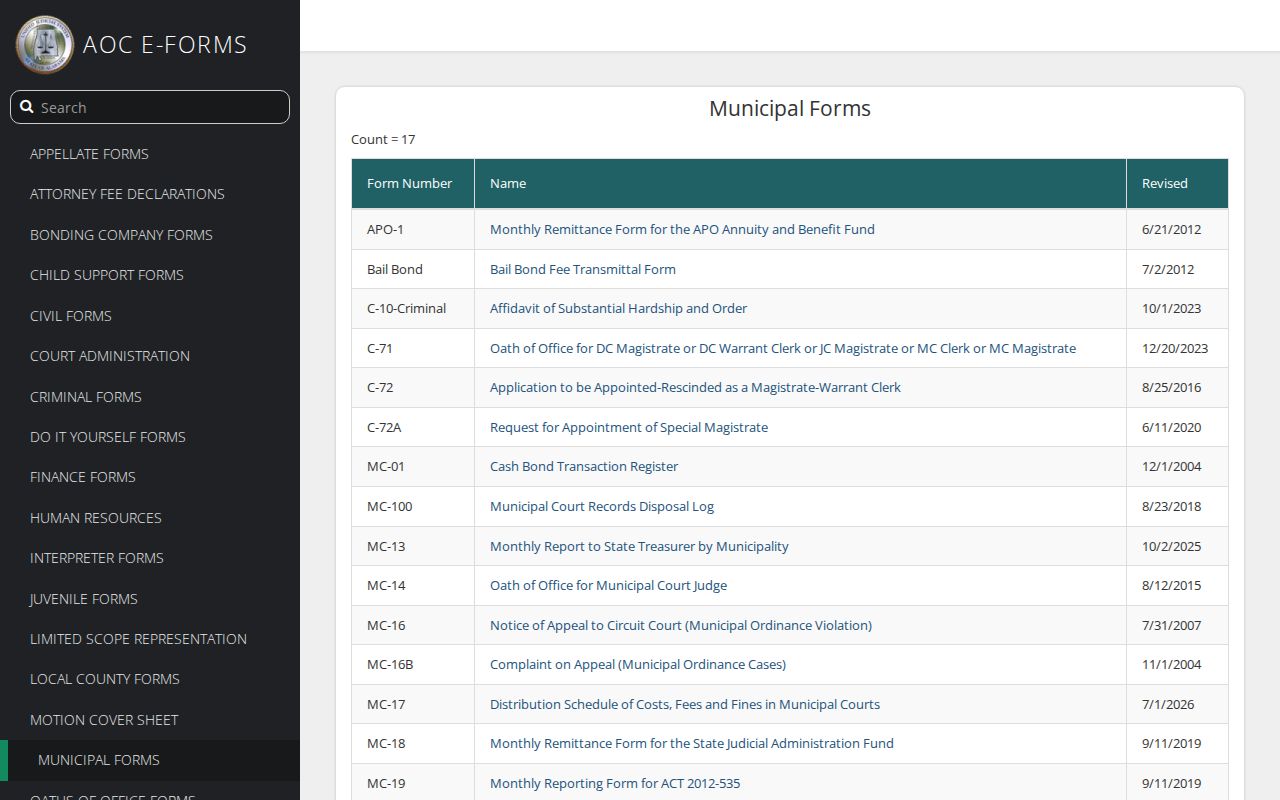
This Alabama court-forms view sets city-court materials beside other judicial forms. The traffic case and any warrant decision still belong to the court named on the citation.
Alabama FTA and License-Hold Systems
Alabama publishes no statewide public FTA or warrant-status lookup. The AOC E-Warrants system, also called the Warrant Management System, is an internal Unified Judicial System application. It is not a public name-search page. AOC reports describe statewide deployment and an ALEA e-crime interface. The reports name no specific warrants or offices. So treat each public channel below as a narrow tool, not one Alabama warrant database.
| Alabama Channel | What It Can Show | Run By |
|---|---|---|
| E-Warrants / WMS | Internal electronic warrant processing; no public query located | Alabama AOC |
| Just One Look | Identified Alabama trial-court case access, one case at a time | AOC |
| Driver License account | The signed-in license holder's own Alabama status and reinstatement tools | ALEA |
| Traffic Service Center | Eligible Alabama traffic-ticket case options, not a warrant result | AOC |
| AlaPay | Alabama payment search for eligible tickets and fines, not recall confirmation | AOC payment service |
| Issuing court and sheriff | The Alabama case order and local service status | District or municipal jurisdiction |
An Alabama license hold is an administrative status. A court order sends it to ALEA in specific situations. It is not the court's warrant record. The authenticated account covers only your own license standing in Alabama; it cannot search another person or prove a warrant was cleared.
The Alabama Traffic Service Center Handles Eligible Tickets
The Alabama AOC Traffic Service Center lets you act on an eligible traffic ticket online. That is its job. It is not an arrest-warrant lookup. Its online resolution page and FAQ walk through a ticket workflow, and the steps start with a case or ticket identifier plus your birth month and year. What you can do depends on the case. Some matters still require an appearance. Where choices exist, they can include requesting more time, submitting proof, asking for a trial, or requesting a date when that option is open. AOC warns that a new Alabama citation can take up to ten business days to appear. A ticket missing from the portal during that window does not mean no Alabama case or warrant exists. The official payment help page gives its own guidance for an eligible ticket transaction. The Service Center can help you handle an eligible citation. It cannot promise that a warrant already issued has been recalled. If an Alabama notice mentions a warrant or a missed appearance, confirm with the Alabama court first. Then ask the serving sheriff or police agency about its record. Payment carries legal consequences too. AOC tells Alabama users not to pay when applying for a not-guilty or trial option. Read the choices attached to the case. Ask the Alabama court if the effect is unclear. An eligible-payment button is not a finding that no warrant is active, and it is not permission to skip a court date.
Checking for an Alabama Traffic Warrant
Start with the citation itself. An Alabama traffic matter turns on a few key details: the issuing court, the city or county, the case or ticket number, and the date tied to the matter. An Alabama case search may show a docket or a payment option without displaying warrant status. Read the Alabama court's own instructions too. Treat a sheriff list only as a lead. If the citation came from a city, check the Alabama city court as well as the county channel.
- Read the citation or notice to identify the District Court or Municipal Court and the issuing jurisdiction.
- Use the Alabama AOC Traffic Service Center for eligible ticket options, or AlaPay to locate a ticket for payment only when you accept the terms.
- Ask the issuing Alabama court clerk or magistrate whether a warrant was ordered, whether it remains active, and what appearance or motion is required.
- Contact the sheriff or municipal serving agency for its local status, then open the County Directory to reach the correct county court and sheriff resources.
- If the portal does not answer the warrant question or the Alabama case is unclear, consult a lawyer before acting or traveling to an office.
Just One Look is case-level. It reaches an identified Alabama trial-court file, not a statewide warrant search. That limit matters. If a law-enforcement record is not posted, ask the Alabama sheriff or agency about its records-request process under the Alabama Open Records Act, subject to applicable exceptions. Ask that office directly. Court records in Alabama come from the Alabama clerk who keeps that docket. Use the court named on the record, never a guessed jurisdiction. Alabama's statewide tools handle selected tasks. Local confirmation runs through the county directory. Note: An Alabama ticket portal can locate an eligible case without showing whether a judge issued, recalled, or quashed a separate warrant.
AlaPay Uses Ticket Identifiers, Not Warrant Status
AlaPay is Alabama's payment portal. It finds an eligible Alabama ticket for payment. The UTC route wants the ticket letter, a seven-digit number, and your birth month and year. The case-number route takes the case number, your Social Security number, and your date of birth instead. Those are ticket-search fields. Nothing here turns AlaPay into a public Alabama warrant database. A completed search is not a certificate that an order was recalled. The Alabama public form also keeps ticket and payment steps separate: search, review, confirm, accept the usage terms, pay, and retain a receipt. Fees apply at checkout. The official site lists a four-percent card processing charge with a one-dollar minimum. Check the current checkout details before you pay. A payment may resolve the ticket. Its effect follows the case terms. If a warrant is attached, ask the Alabama court what separate action and record update are needed. The official AlaPay search form shows its ticket identifiers before any payment step, and its blank search workflow is not a completed Alabama case or a warrant result.
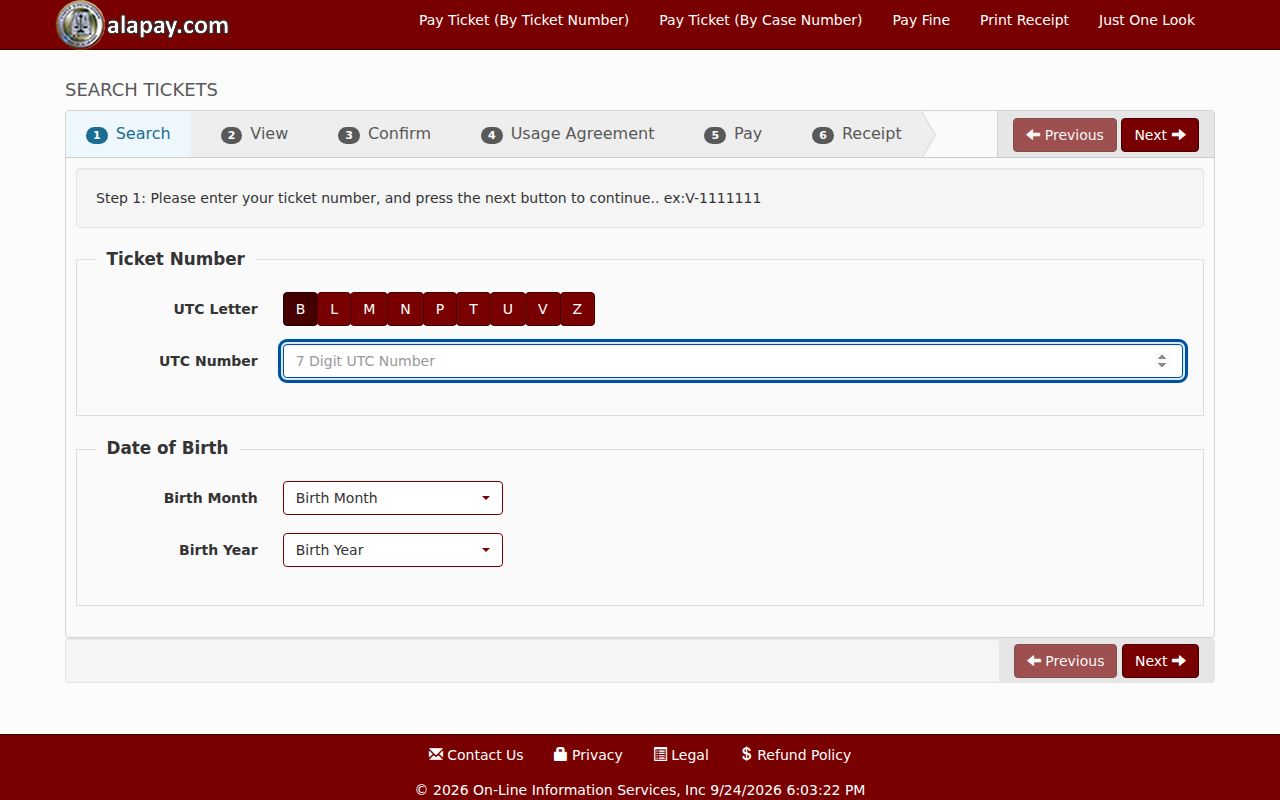
A blank payment search cannot tell you whether an Alabama court has an active warrant. Confirm the court order directly. Do that even after the ticket is paid. Note: A payment receipt proves a transaction, not that an Alabama court's warrant entry or ALEA's separate license record has been updated.
How to Lift an Alabama Traffic Warrant
Alabama has no instant recall button. No statewide one exists for a traffic warrant. Ask the issuing Alabama court what the case requires. Depending on the case, the court may require an appearance, a motion to recall or quash, payment, bond, or another step. The judge or Alabama court with authority over the case decides whether to recall the warrant. AOC's ticket site cannot replace that decision. Neither can AlaPay.
- Confirm the Alabama case, court, warrant status, and current amount or appearance requirement with the issuing office.
- Ask the court whether a motion, new appearance date, or other Alabama case action is needed before paying or traveling.
- Use an Alabama online payment or resolution choice only if it applies to the case and you understand any plea or trial effect.
- Keep the Alabama court order or receipt, and ask whether the sheriff or ALEA must update a separate record.
Before paying: Alabama ticket payment may affect plea or trial rights, and payment alone does not prove that a judge recalled a warrant.
Alabama publishes no uniform recall timeline or statewide walk-in procedure. A court clerk can explain filing steps but cannot promise a judge's ruling. If an arrest may occur during contact, a lawyer can help arrange a safe and informed next step. Keep the next court date. Keep any written order too.
Act 2023-337 Sets Limits for Alabama License Suspensions
Alabama put firm limits on license suspensions tied to missed court dates. Act 2023-337 took effect on October 1, 2023, amending Ala. Code §32-6-17.1. Judges may suspend a license only in narrow situations now. Those include certain missed bond, pre-adjudication, trial, or repeated post-adjudication traffic-compliance dates. Payment plans get a guardrail too. For traffic fines, fees, or costs, nonpayment cannot support suspension unless at least three required installments were missed. Commercial drivers sit outside the Act. The exclusion covers commercial learner's permit and commercial driver's license holders, plus anyone operating a commercial vehicle at the time of the violation. The current Alabama statute and Act 2023-337 spell out these limits in full. ALEA then acts on the Alabama court's order. It cannot recall the court warrant. An authenticated ALEA account shows a license holder their own standing and the reinstatement steps, since Alabama offers no public anonymous FTA-hold search. The official ALEA reinstatement page walks through that separate administrative process for license status. Its listed fees are reinstatement fees, not a warrant bond or the amount owed to a traffic court.
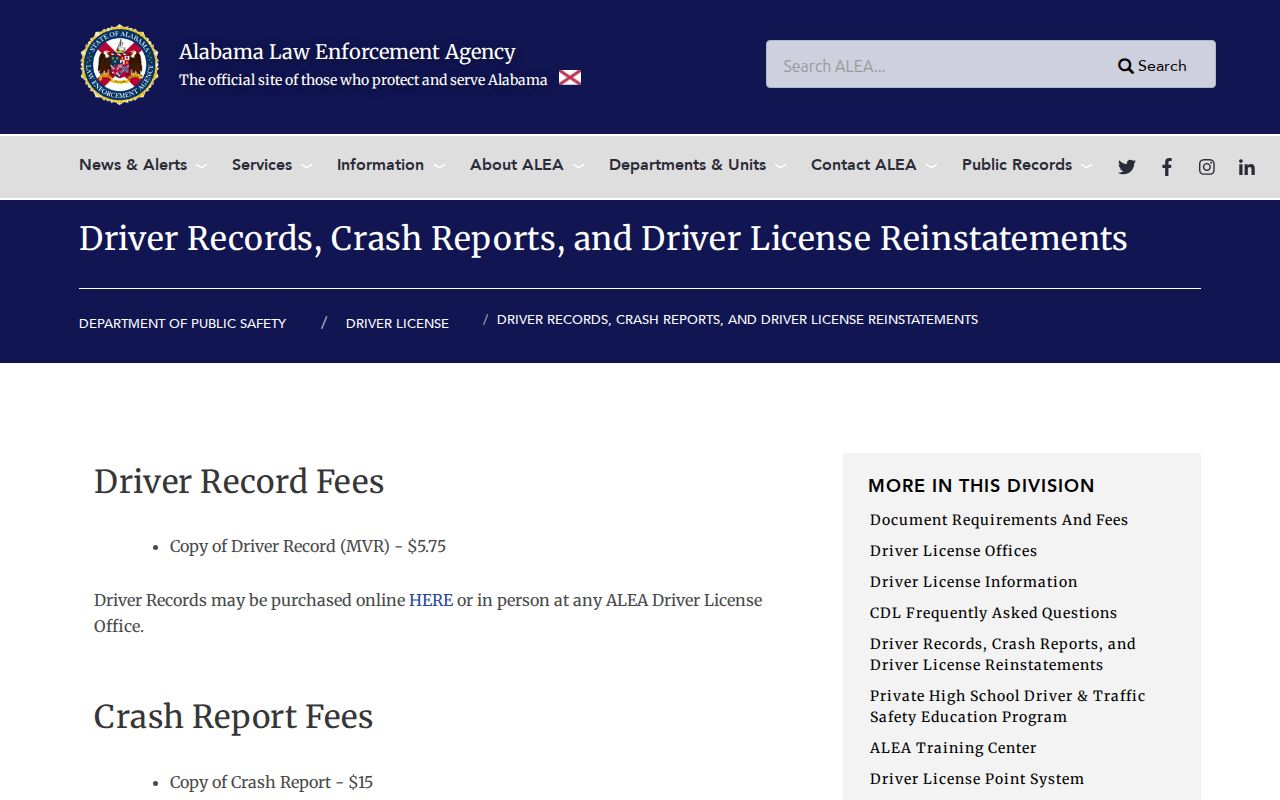
This Alabama agency page covers an administrative license record. A person may need to resolve the underlying court case and confirm its order before pursuing ALEA reinstatement.
Separate records: Alabama license standing, a ticket balance, and a court warrant are different matters; resolving one does not automatically prove the others are clear.
How a Traffic Warrant Differs From a Driver Record
An Alabama traffic case can spawn several records. Keep them straight. The warrant is judicial process within the issuing court's own case file. ALEA, by contrast, keeps the driver's administrative license status. A citation-payment service may show an eligible amount or a completed transaction, while a warrant recall remains a court decision. So an Alabama result in one channel never certifies the status of the other files.
| Record or Action | What It Answers | Where to Confirm |
|---|---|---|
| Alabama traffic citation case | Ticket, appearance, plea, balance, or order | Issuing District or Municipal Court |
| Alabama traffic warrant | Whether judicial process was issued or recalled | Issuing court and serving agency |
| Alabama license status | Whether a separate court-ordered suspension affects the account | ALEA account holder services |
| Alabama payment receipt | Whether a payment transaction was submitted | Payment service and issuing court |
A driver record and a warrant check answer different questions. ALEA keeps the license file as an administrative record, while the warrant is a court order a judge signed. An Alabama traffic warrant search must go to the case, not the license status. Verify the Alabama case number, follow the issuing judge's order, and confirm each office that touched it has recorded the action.
Note: If an Alabama online case result and an Alabama court notice disagree, ask the issuing Alabama court which order controls and keep its written answer.
Alabama Municipal Costs Are Not a Warrant Bond
Alabama municipal courts rely on the MC-17 schedule to sort out court costs, fees, and fines by category. The version revised in October 2025 shows a $15 DNA database cost under Act 2025-306 and Ala. Code §36-18-32. That cost applies to certain traffic and nontraffic cases, bond forfeitures, and the issuance of an alias or capias warrant of arrest. Parking cases are excluded. So the figure is one defined cost line, not a universal Alabama warrant price or bond amount. What matters is your case type and the current order in your court. Alabama Rule 7.2 offers a recommended general bail schedule too, but it is not a bond quote for any single warrant. Bond gets set in the Alabama case itself under the applicable rules. Call the issuing Alabama Municipal or District Court before trusting a number from an old citation, a payment page, or a third-party post. The MC-17 index lists cost categories. It cannot show what any one person owes.