
Inside the Alabama Warrant System
Every Alabama warrant begins with a court or a judicial officer authorized in that case. Circuit Court takes felony matters. District Court handles county-level misdemeanors, preliminary hearings, and assigned traffic cases. Municipal Courts hear city matters within their legal scope. The order names a person and an alleged offense, directs an officer to act, and returns to the Alabama court written on its face. That court controls its own case, and only it can recall the order later. Behind the scenes, the Alabama Administrative Office of Courts supports the Unified Judicial System and reports E-Warrants, also called WMS, deployed statewide with an interface to ALEA e-crime software. That proves Alabama courts have an electronic capability. It is not a public portal, and no county-by-county coverage map exists. Service may fall to an Alabama sheriff, a municipal police officer, or a marshal, while the clerk holds the docket. To trace one case, use the County Directory for the local Alabama route.
AOC WMS Is an Internal Statewide Tool
The Alabama AOC counts E-Warrants, or the Warrant Management System, among the judicial applications it supports. Its annual reports describe continued statewide deployment. They offer no public warrant search form. No user manual, record-level data map, active-warrant total, or list of participating counties and agencies appears in them either. So the word statewide is not a promise that every local order sits in a public index. The FY2023 AOC report is the clearest public statewide account Alabama publishes. It names WMS and its ALEA e-crime interface. It stays silent on which warrant categories flow through that interface, how fast a recall shows up, and who edits each field. Treat WMS as an institutional tool for Alabama's courts and law enforcement, not as a self-service warrant search for the public.
Alabama Administrative Office of Courts
Judicial-system administration and Alabama statewide court technology, including the reported E-Warrants/WMS application.
Alabama Law Enforcement Agency
Alabama state law-enforcement agency with the e-crime interface described by AOC and a separate public fugitive-information channel.
Those agency roles never replace the issuing Alabama court. The AOC FY2023 annual report documents the interface, but it promises neither public access nor complete statewide warrant coverage.
Alabama Statewide Warrant Databases
Alabama systems answer different questions. Some sit behind agency walls. Others work at the case level, and a few handle selected traffic tickets. No single official portal searches every Alabama county, city, and court warrant. Keep each system's coverage and limits separate.
| System or Channel | What It Holds or Shows | Operator and Public Scope |
|---|---|---|
| E-Warrants / WMS | Alabama electronic court warrant management | AOC; internal application, no public warrant query found |
| ALEA Fugitive Search | Alabama public fugitive information entries | ALEA; limited search with no completeness statement |
| Just One Look | Identified Alabama trial-court case information | AOC; one case at a time, not an all-warrant search |
| Traffic Service Center and AlaPay | Eligible Alabama ticket options or payment | AOC services; not a warrant-status result |
| County sheriff and issuing court | Local Alabama warrant, case, service, and recall confirmation | Alabama county or city jurisdiction; public access varies |
| NCIC | Restricted law-enforcement information | FBI-administered; not a public search site |
Alabama's public channels each do one job. An ALEA fugitive entry is not a WMS record. A paid ticket is not a recall order. An empty county page does not prove no other court issued a warrant. For a straight answer, ask the issuing court which record fits your question.
An AOC-ALEA Interface Leaves Coverage Unknown
Alabama AOC reports confirm a WMS-to-ALEA e-crime interface. They never describe the data path. The public record does not show whether transfer is automatic, which Alabama county or municipal agencies enter records, which warrant types are included, or how service and recall messages travel. The published annual-report language supports a statewide deployment claim and nothing more. It does not support saying every warrant reaches ALEA or a national database. NCIC is a restricted law-enforcement system. No Alabama public service searches NCIC or confirms whether a local Alabama warrant was entered there. Entry and access depend on agency authority and applicable rules, and no public update schedule or coverage roster exists. An online result is not complete or current just because a statewide agency's name sits on it. For a personal Alabama case, ask the issuing court about the judicial order, and ask the sheriff or police unit about service. These Alabama offices can address their own records even when no public list exists. A missing statewide result is a reason to keep going through the local route, not a finding that no warrant exists.
Note: Alabama's public sources do not publish WMS participation, record categories, or the time a court update takes to reach another system.
How Alabama County Warrants Reach the State
Only part of the Alabama warrant journey is public. A judicial officer issues the order. The Alabama court keeps the case docket. An Alabama sheriff, municipal police officer, marshal, or other authorized officer may receive and execute the warrant, then return process to the court. AOC reports statewide WMS deployment and an ALEA e-crime interface. They publish no exact county-to-state record transfer sequence.
Known institutional path: Alabama issuing court › court docket and local service agency › AOC WMS statewide capability and reported ALEA e-crime interface › public confirmation through the issuing court or sheriff.
No rule sends every Alabama county warrant into one shared database, and nothing guarantees automatic transmission across systems. The court named on the citation keeps control of the case order. That is where an Alabama warrant question starts. Next, ask the sheriff or police agency assigned to serve it. Local contact paths for each Alabama county are in the County Directory.
Alabama Courts Divide Warrant Work
Alabama splits its court work across several tiers, so a warrant question rarely starts at the top. The AOC counted 41 Circuit Court circuits, 67 District Courts, and 278 Municipal Courts in FY2022. Those are big numbers. Many warrant questions in Alabama begin in a District Court or a city courtroom instead of a Circuit Court. The counts describe court structure only, not how many warrants are active or which agencies post public searches.
- Alabama Circuit Court
- General trial court that handles felony prosecutions and other assigned matters.
- Alabama District Court
- Alabama county-level limited-jurisdiction court for misdemeanors, preliminary felony matters, and assigned traffic cases.
- Alabama Municipal Court
- City court for ordinance violations and other cases within its legal jurisdiction.
- Circuit Clerk
- Alabama county clerk's office that administers Circuit and District Court records; confirm the right division.
- Municipal clerk
- City court record contact for the municipal docket.
Two side doors deserve mention. Alabama's Probate Courts handle limited statutory duties, not the ordinary criminal warrant. Federal district courts run on a separate system entirely. Knowing the tier helps you find who can confirm an order, but the city or county named on the case still controls.
Fugitive Warrants and the US Marshals
Federal process sits apart from anything an Alabama Circuit or District Court judge signs. Alabama falls under three federal districts: Northern, Middle, and Southern. Each has its own clerk and its own divisions. The official PACER access page opens public dockets under its account and fee terms, though sealed filings stay out of view. PACER is a docket tool, not a universal warrant-status search. On the fugitive side, the U.S. Marshals Service runs federal pursuit and often teams with local partners. The Gulf Coast Regional Fugitive Task Force spans Alabama and Mississippi, but it is an enforcement partnership, not an Alabama roster or court clerk. For routing a federal question, the U.S. Marshals district contact list points to the right office, though it cannot speak to a state-court bond or recall. The court and district printed on any federal notice is the pair to use.
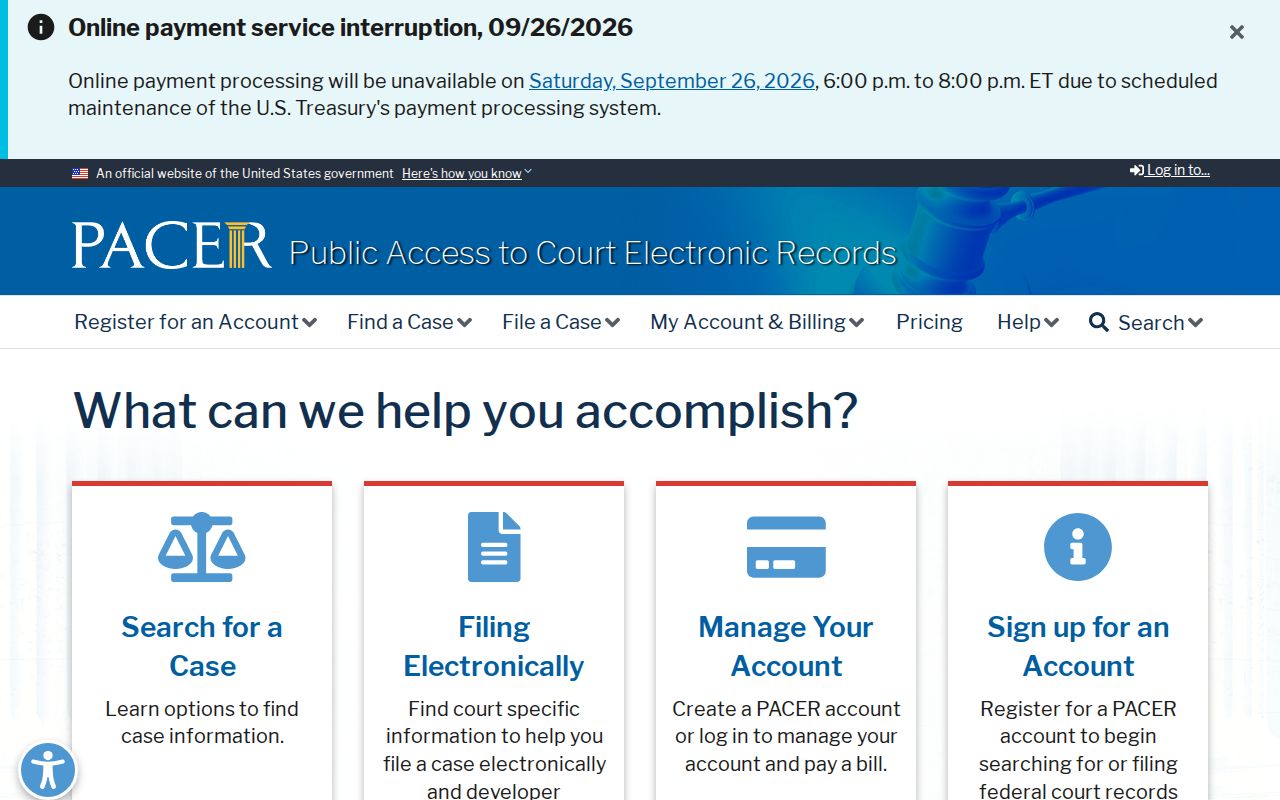
A federal docket and an Alabama county court system answer to different custodians. A blank PACER result settles nothing about an Alabama warrant or a sealed federal matter.
Alabama FTA Suspensions Sit Outside Warrant Recall
Alabama also created a court-ordered driver's-license suspension track for certain failures to appear. Act 2023-337 took effect October 1, 2023 and amended Ala. Code §32-6-17.1. The law caps when a judge may order suspension after specified missed bond, pre-adjudication, trial, or repeated post-adjudication compliance dates. On a traffic payment plan, three or more missed installments are generally required before suspension for nonpayment. CDL and CLP holders are excluded, along with anyone operating a commercial vehicle at the time of the violation. ALEA then carries out a qualifying Alabama court order and offers an authenticated account where an individual can view license standing and reinstatement services. That account is not a public FTA or warrant search. Keep the records separate: a license reinstatement does not recall an Alabama court warrant, and a warrant recall does not update ALEA's license record on its own. For the statutory limits, read the current statute and Act 2023-337. ALEA's official reinstatement information lays out that separate administrative route for license status.
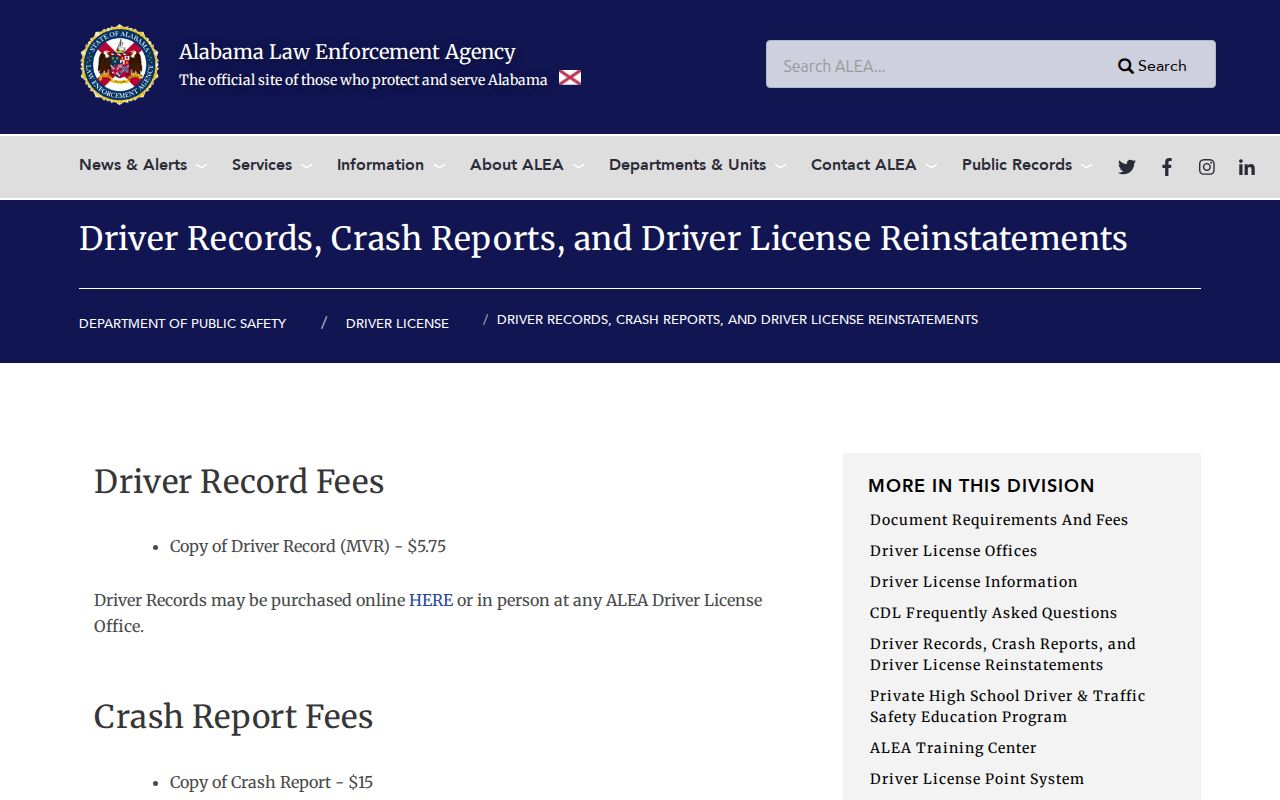
For an Alabama traffic case, confirm the warrant order with the court and the license standing with ALEA. Two offices, two records.
Keep the records separate: A court warrant, an FTA license suspension, and a ticket payment have different rules and custodians in Alabama.
Alabama Statewide System vs County List
Alabama's statewide technology layer may support electronic court processing or law-enforcement exchange behind the scenes. A county sheriff list or phone line stays local. The issuing Alabama court's docket is still the record of the judicial order itself. No public all-warrant query exists in Alabama, so match the channel to your question and confirm with the record holder.
| Feature | Statewide Layer | County or City Record |
|---|---|---|
| Public search | No public WMS query found | May be a sheriff list, court portal, phone line, or direct request |
| Coverage statement | Annual reports say statewide deployment; specific coverage is unpublished | Scope varies by court, agency, and local page |
| Order and recall | Supports internal processing; public authority not established | Issuing Alabama court controls the order and recall |
| Service status | Interface details and update timing are not published | Serving sheriff or police agency can confirm its own record |
For public starting points, turn to Warrant Lookup and the County Directory. A name missing from any list proves little. Only the issuing court or the agency serving the warrant can confirm it.
Alabama Court Recall Needs Local Confirmation
After an Alabama judge recalls or quashes a warrant, each office updates its own slice of the record. The judge signs the order. The Alabama clerk enters it on the court docket. The sheriff or police agency notes it in service records, while ALEA may keep a separate license record in a traffic case. No statewide timer or public update promise ties these pieces together, so ask each office directly.
- Ask the issuing Alabama court for the current order and written proof of any recall or disposition.
- Ask the Alabama clerk whether the case docket reflects the judge's action and any new date or condition.
- Confirm the Alabama sheriff or police unit has updated its local warrant or service record.
- If a traffic license suspension was involved, check the license holder's own ALEA account separately.
- Keep receipts and court papers, and follow up with each office if its record still differs.
That sequence sets no clock. It just names Alabama's separate record holders, so you know which office to ask about the record it keeps. Paying a fine or making a call does not itself prove the judge recalled the warrant. Note: Alabama court, sheriff, and license records may each need separate confirmation after a case action.
Alabama Warrant Technology and History
Alabama's AOC tells the WMS story one annual report at a time. No single launch date appears anywhere. No court-by-court completion schedule does either. The FY2015 report describes warrant-management functionality as a recent technology development. By the FY2018 report, deployment and interface work were still under way, and later reports go on listing E-Warrants as a supported application. The FY2022 and FY2023 reports then describe statewide WMS deployment across Alabama, with FY2023 also naming the ALEA e-crime interface. None of them lists an active-warrant count, a public search plan, participating agencies, or a completion date. The honest Alabama history is a phased build that still runs, not one announced portal launch. Alabama's Rules on Privacy and Confidentiality of Court Records took effect January 1, 2025 and state that they do not create, expand, or restrict existing access rights. That milestone concerns court-record privacy and access, not a public warrant database for Alabama. Modern systems can upgrade internal handling while public access stays spread across Alabama courts and local agencies.
A Missing Alabama Result Is Not Proof of Clearance
A public list can be incomplete by design. Alabama's ALEA Fugitive Search publishes no county enrollment, date range, refresh cadence, or total active-warrant count. The AOC WMS is not public at all. Local sheriff pages vary widely, and some court information may be restricted before service or by law. So a negative result cannot establish that a warrant was never issued or has been recalled. For an Alabama case, find the Circuit, District, or Municipal Court that handled the matter and call that clerk or magistrate. An Alabama sheriff can confirm service status within its own role. Federal cases take a separate route through the federal clerk or the U.S. Marshals. Don't treat a license account, a traffic payment portal, or a most-wanted search as a complete warrant check for Alabama. Note: only the issuing court can confirm its current judicial order, and no Alabama public service searches every state and local warrant.